
Can You Build an Uber Eats–Style App with Vibe Coding?
The short answer is yes.
Modern AI coding tools make it possible for a solo founder to build an online food ordering platform in weeks instead of months. With vibe coding, you can generate user interfaces, APIs, databases, and even deployment scripts using natural language prompts.
However, building a production-ready food delivery app is much more than asking AI to “create an app like Uber Eats.”
A successful platform requires thoughtful planning, a great user experience, secure payment processing, reliable integrations, and continuous testing.
This guide walks you through everything you should consider before launching your own online food ordering application.
Start With the Business Model, Not the Code
Before writing your first prompt, define exactly what you’re building.
Ask yourself:
- Is this for a single restaurant?
- Will multiple restaurants join the platform?
- Will drivers deliver orders?
- Will restaurants manage their own menus?
- Will customers schedule future orders?
- Will the platform charge commissions?
- Will there be subscriptions or delivery fees?
These decisions influence every technical choice you’ll make later.
Design the User Experience Before Building
One of the biggest mistakes in vibe coding is generating screens without planning the customer journey.
Your application should feel simple from the first interaction.
A typical customer flow looks like this:
- Open the app.
- Detect or enter the delivery address.
- Browse nearby restaurants.
- Search or filter food.
- View menu details.
- Add items to the cart.
- Customize meals.
- Checkout.
- Pay securely.
- Track the order in real time.
- Receive delivery.
- Leave a review.
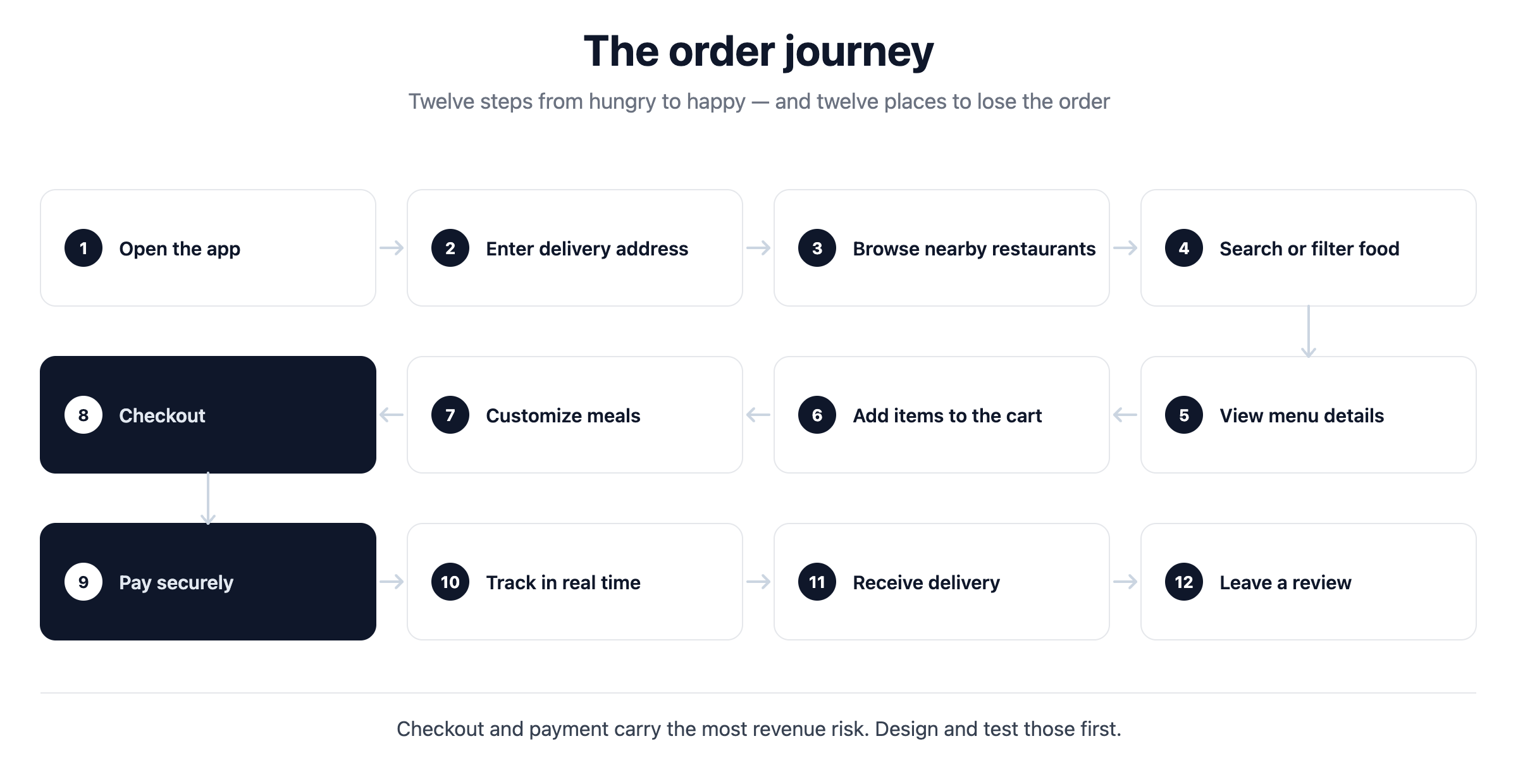
If any step feels confusing, users may abandon their order.
A great UX often matters more than adding dozens of extra features.
Write Better AI Prompts
The quality of your application depends heavily on the quality of your prompts.
Instead of saying:
Build an Uber Eats clone.
Use prompts that describe exactly what you need.
For example:
- Build a responsive restaurant listing page with search, cuisine filters, ratings, estimated delivery time, and promotional badges.
- Create a shopping cart that supports multiple item modifiers, quantity updates, promo codes, tax calculations, and delivery fees.
- Build a checkout page with address validation, payment options, and order summary.
- Create reusable React components with TypeScript and proper folder structure.
- Follow accessibility best practices and mobile-first responsive design.
- Separate business logic from UI components.
- Write unit tests for critical functions.
The more detailed your prompt, the better the generated code.
Think like a product manager, not just a programmer.
Choose the Right Technology Stack
AI can generate code in almost any framework.
Popular choices include:
Frontend
- React
- Next.js
- Flutter
- React Native
Backend
- Node.js
- NestJS
- Laravel
- Django
Database
- PostgreSQL
- MySQL
- Supabase
- Firebase
Hosting
- Vercel
- Railway
- DigitalOcean
- AWS
- Google Cloud
The right stack depends on your team’s experience, scalability requirements, and long-term maintenance goals.
Avoid choosing technologies simply because AI suggested them.
Essential Features Every Food Ordering App Needs
Your MVP should include the core features users expect.
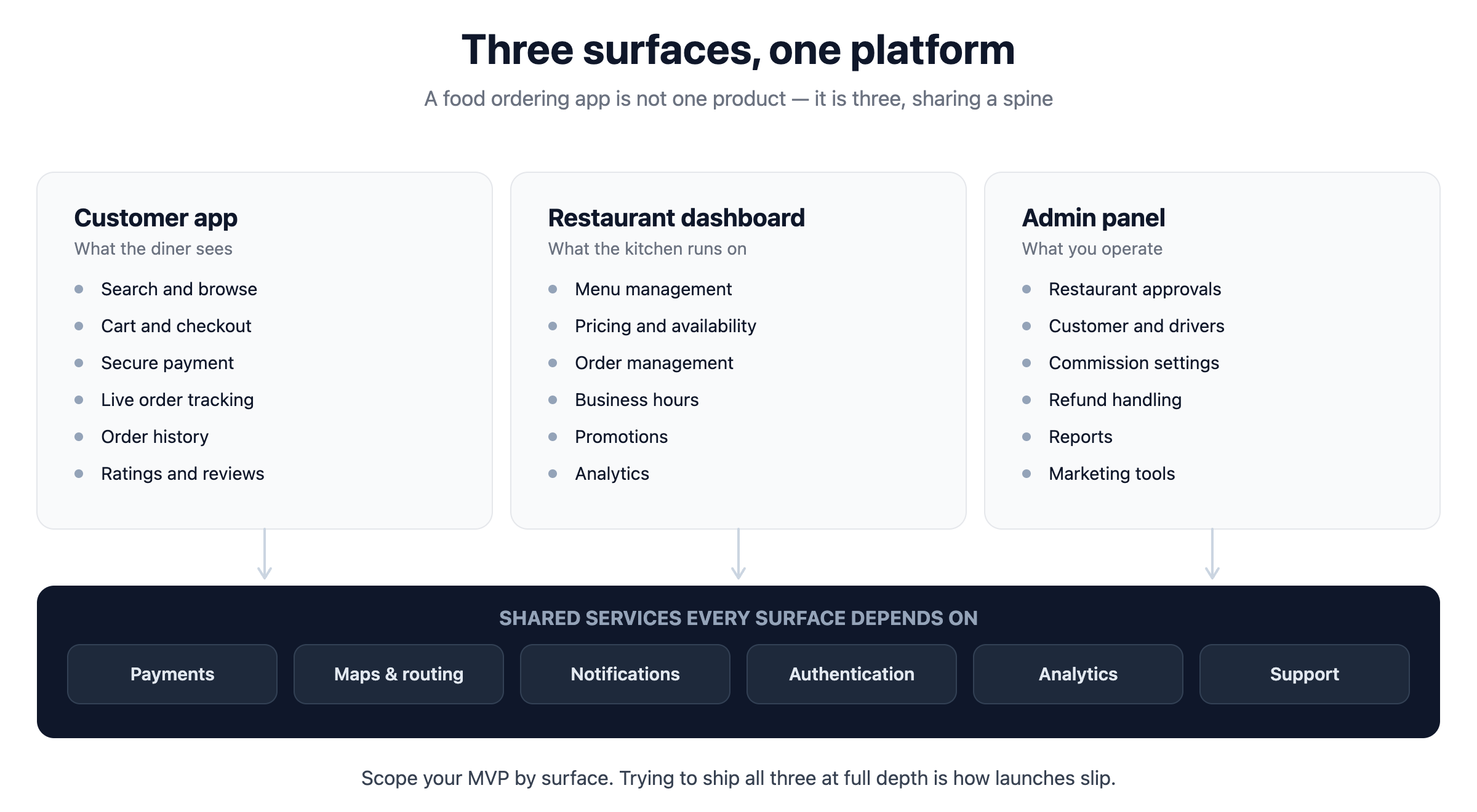
Customer Features
- User registration
- Login with email or social accounts
- Restaurant search
- Food categories
- Shopping cart
- Secure checkout
- Order history
- Live order tracking
- Ratings and reviews
- Push notifications
Restaurant Dashboard
- Menu management
- Pricing updates
- Availability controls
- Order management
- Business hours
- Promotions
- Analytics
Admin Panel
- Restaurant approvals
- Customer management
- Driver management
- Commission settings
- Refund handling
- Reports
- Marketing tools
Payment Processing Requires Special Attention
Handling money is one of the most critical parts of your application.
Your platform needs to support:
- Customer payments
- Restaurant payouts
- Platform commissions
- Refunds
- Taxes
- Tips
- Discounts
- Promotional credits
Instead of building payment infrastructure from scratch, integrate trusted payment providers.
Your payment flow should include:
- Secure payment authorization
- Confirmation after successful payment
- Automatic receipt generation
- Refund management
- Failed payment handling
- Transaction history
Never store sensitive payment information yourself unless you fully understand compliance requirements.
Integrations That Make Your Platform Better
Modern food ordering platforms rely on many third-party services.
Common integrations include:
Maps
- Restaurant location
- Customer location
- Delivery routing
Notifications
- Email confirmations
- SMS updates
- Push notifications
Authentication
- Google login
- Apple login
- Phone verification
Analytics
- User behavior
- Conversion tracking
- Funnel analysis
- Revenue reporting
Customer Support
- Live chat
- Help center
- Ticketing system
Marketing
- Email automation
- Loyalty programs
- Referral systems
- Promo codes
These integrations improve the user experience without requiring you to reinvent existing solutions.
Test Everything Before Launch
AI-generated code should never go directly into production without testing.
Review every major workflow, including:
- User registration
- Login
- Password reset
- Restaurant search
- Shopping cart
- Checkout
- Payment processing
- Order placement
- Notifications
- Refund requests
- Restaurant dashboard
- Admin functions
Also test edge cases, such as:
- Slow internet connections
- Failed payments
- Empty carts
- Closed restaurants
- Invalid promo codes
- Large orders
- Multiple simultaneous users
A small bug in checkout can cost thousands in lost revenue.
Security Should Never Be an Afterthought
Food delivery platforms process sensitive customer information.
Protect your application by implementing:
- Secure authentication
- Role-based permissions
- HTTPS
- Input validation
- Rate limiting
- Secure API authentication
- Encrypted passwords
- Audit logs
- Regular dependency updates
Security builds trust with both customers and restaurant partners.
Improve Your App After Launch
Launching your app is only the beginning.
Successful founders continuously improve their products by monitoring:
- Customer feedback
- Conversion rates
- Checkout abandonment
- Average order value
- Restaurant performance
- Delivery times
- User retention
- App performance
- Crash reports
Use this data to prioritize new features and optimize the user experience over time.
Final Thoughts
Building an online food ordering app similar to Uber Eats has never been more accessible. Thanks to vibe coding, solo founders can create impressive applications with a fraction of the time and cost required just a few years ago.
But success doesn’t come from generating code alone. It comes from making smart product decisions, designing an intuitive user experience, writing clear AI prompts, choosing the right technology stack, integrating reliable third-party services, securing payment processing, and thoroughly testing every workflow.
Treat AI as your development partner—not your product manager. Focus on solving real customer problems, validate your ideas early, and improve your platform with every release.
When you combine thoughtful planning with the speed of vibe coding, you’ll be in a much stronger position to build a food ordering platform that users trust and restaurants are excited to join.